Protected by law, the Moroccan eel is coveted by a growing international market. In recent years, a local industry has been structured to legally and sustainably feed this market.
In the waters of the Sebou, lives a fascinating species which is the object of international covetousness. A few videos that have been circulated recently on social networks have highlighted the images of small elongated and wriggling fish, stressing that some Asian countries are willing to pay huge sums in order to import them.
These fish are spines, that is to say juvenile eels, halfway between the fry (elver) and adult phase. While there is no popular recipe in Morocco for an eel tagine, the fact remains that the consumption of this species by Moroccans is increasingly through gourmet restaurants or sushi. The international (and legal) export of Moroccan eels is also a growing activity.
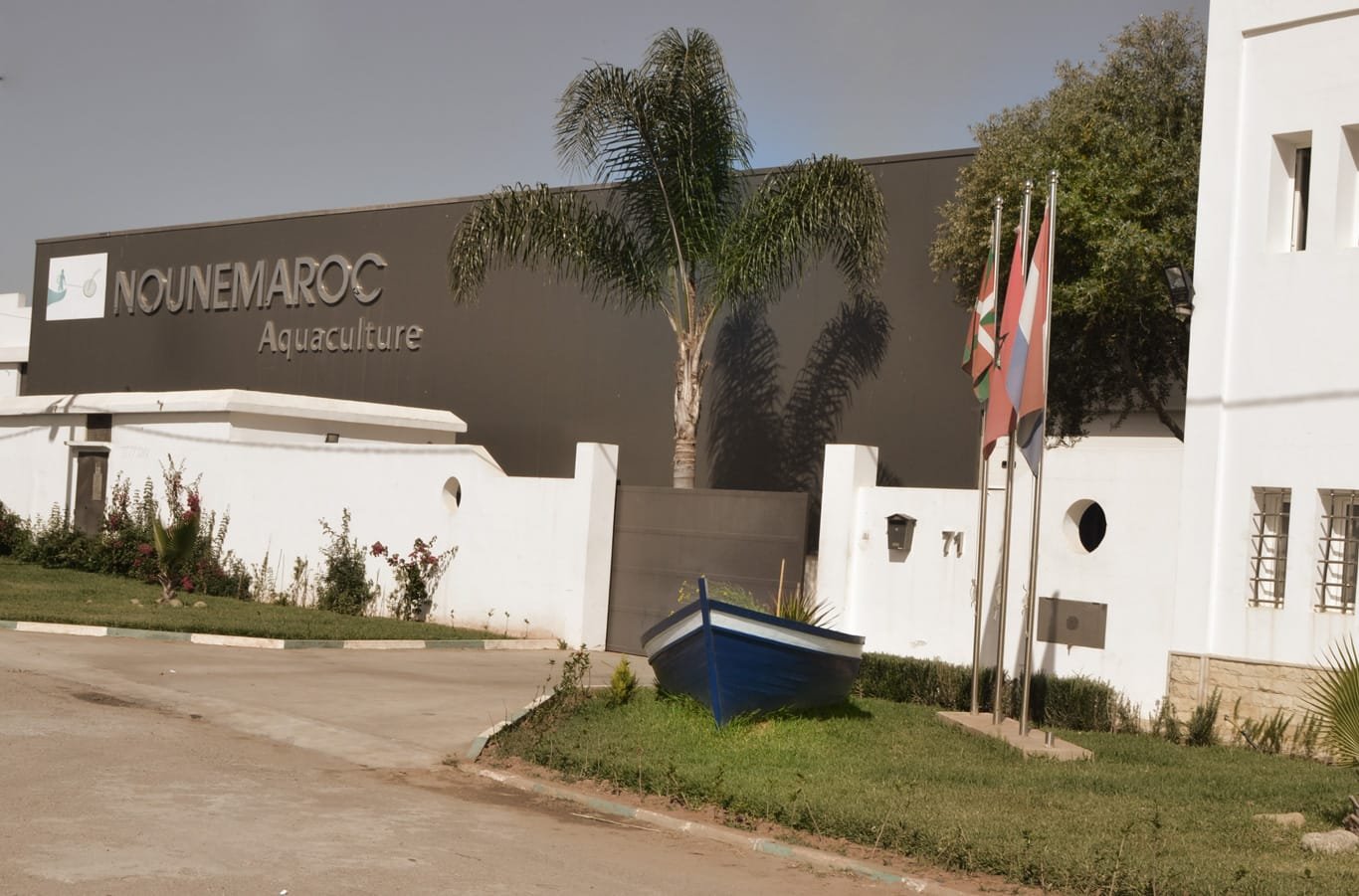
We settled in Morocco in 2006. At the time, we signed a contract with the Moroccan government so that we could fish for elvers and then stock them for export and repopulation of rivers,” says Gérôme Gurruchaga, Managing Director of Nounemaroc.

A new economic niche
The establishment of the company, affiliated to the international group Nijvis, coincided with a decision of the European Union to ban the import and export of eel on its territory.
Following the listing of eels as Annex 2 to the Convention on International Trade in Endangered Species of Wild Fauna and Flora (CITES), eels have also become a species whose trade must be regulated. This was all the more necessary for us professionals, because the species is often trafficked», explains the founder of Noune Maroc.
However, the eel-related fishery in Morocco is very artisanal compared to other regions in the world and especially Europe. The absence of a real local eel market and its still significant presence in the Sebou have allowed the development of a small national industry mainly dedicated to export. In Morocco, the elver fishing quota is 1500 kg per year, all professionals combined. Noune Maroc is entitled to 1200 kg while another small company is entitled to 300 kg», explains the same source.
A thriving industry
We never reach our annual quota because we fish about 1000 kg of elvers a year, because our station is sized for that amount. Knowing that one kilo of elver represents 3,000 eel fry, we take 100 kg of elver each year to produce about 300,000 spines that we release later upstream of the dams of the Sebou wadi to contribute to the conservation of the species», says Gérôme Gurruchaga.
The rest of the elver harvested by the company is then farmed in a closed-containment system that uses “technology that controls 100% production, and implements sanitary control that avoids the use of pesticides or antibiotics”.
The company’s investments, supported by the hard work of nearly 220 Moroccan employees, have enabled the company to reach an annual production of 500 tonnes of eels destined mainly for export in 2021, for a turnover of 100 million dirhams. Today, we sell Made In Morocco eels in Seoul, Tokyo and New York. We sell live, adult eels from 300 to 500 g,” says the expert.
Fight against trafficking
A few years ago, several sources had reported the existence of international elver traffic channels located in Morocco, which offered up to 10,000 dirhams per kilo of elver.
Indeed, the living elver is highly sought after in some Asian countries that seek it to feed their breeding stations. In Hong Kong, this product can reach up to 4000 euros per kilo. Three or four years ago, we were able to work with the authorities to dismantle Chinese, Korean and Spanish networks,” says Noune Maroc’s CEO.
Thanks to the 200 fishermen from Noune Maroc deployed in the field from January to June, the company identified «buyers» whose reports were relayed to the authorities.
Moroccan customs were also alerted because the elver can only come out alive, through the airports. Asian traffickers usually carry the elver by travelling in first class, using suitcase compartments where bags filled with water and oxygen are arranged,” explains Gurruchaga. After a period that was marked by the dismantling of several networks, the professional confides that this kind of activity has currently disappeared.
Source: l’opinion 21 sept 2021